
Since then, like an evolution tree, the resorts have developed rapidly and branched off in different (but always upward) directions.
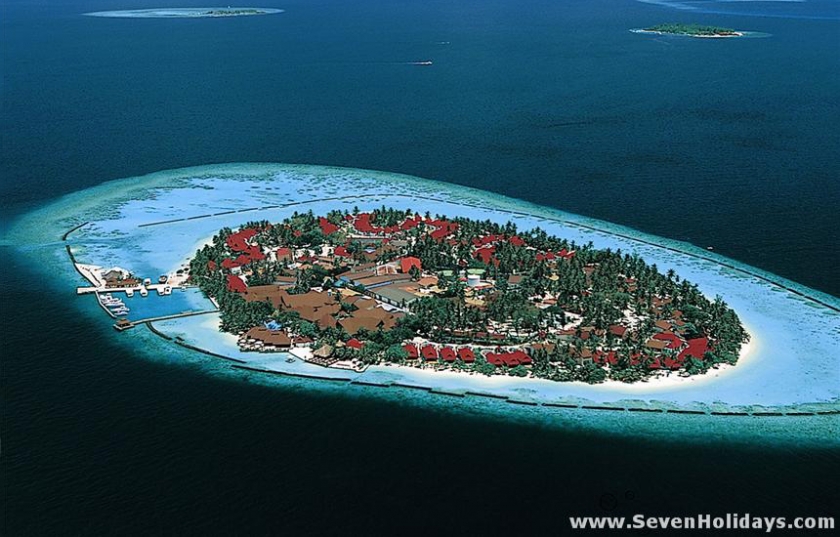
As the closest resort to the capital and the airport, Kurumba has always had, as it were, a licence to develop differently, as a mix of natural Maldives and a prestigious showcase of modern Maldives that could host visiting presidents and business executives. Kurumba was completely rebuilt in 2003/4 and most recently has been going through a revitalization with a continual upgrade philosophy. At the heart of this has been the truly excellent GM Jason Kruse.
Like a new, planned village, there isn’t a single path circling the island but a network of them connecting all the rooms and facilities together and shared by pedestrians and cars. Well, no, that’s really strolling couples and humming club cars. The 9 room categories are in distinct locations and they cluster in shapes like horseshoes and candelabra around gardens. The village square (with piped music instead of a public address) is the paved area around the swimming pool, which is surrounded by the restaurants, bars and lounges that vaguely mark the time within each long, sun-drenched day.
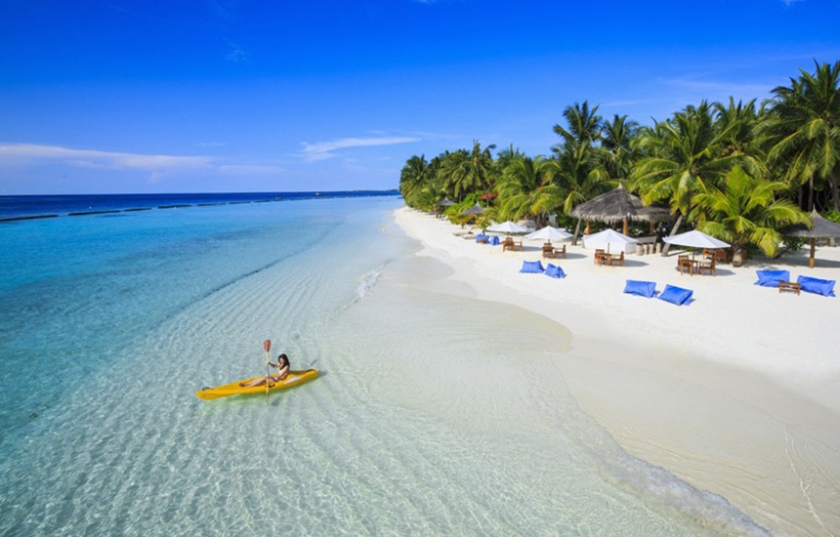
The entire island is surrounded by a very good beach that narrows and bulges in different places as it moves throughout the year, unrestricted by groynes. This fine feature is, however, somewhat offset by the presence of a lagoon wall that encircles the resort. On the other hand, the enclosed lagoon ensures a calm lagoon and safe swimming. And after a couple of days it slips from the mind, except where it is close to land.
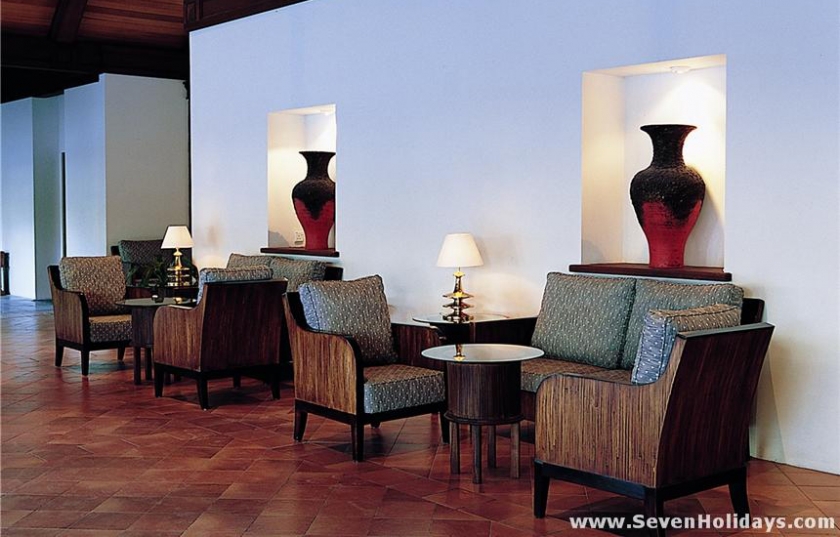
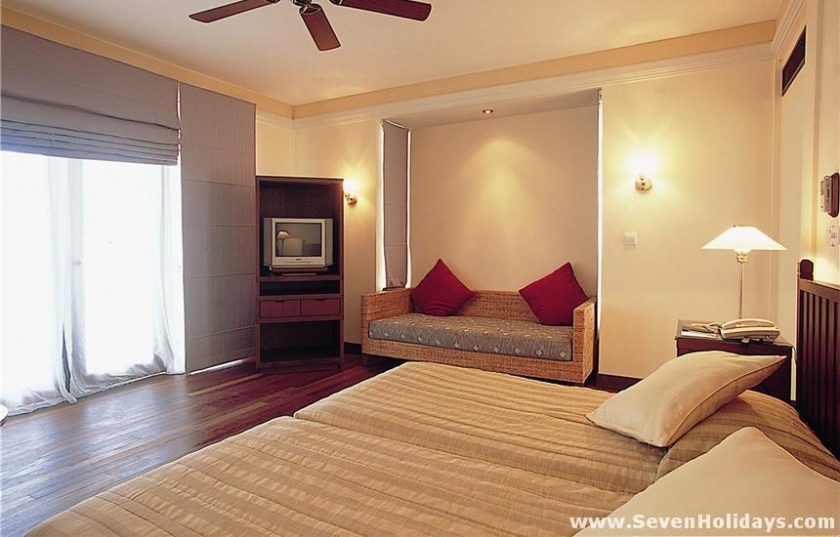
that narrows and bulges in different places as it moves throughout the year, unrestricted by groynes. This fine feature is, however, somewhat offset by the presence of a lagoon wall that encircles the resort. On the other hand, the enclosed lagoon ensures a calm lagoon and safe swimming. And after a couple of days it slips from the mind, except where it is close to land.It’s an odd fact that the wall is closest to land just by the most expensive rooms, the 4 Presidential Suites and the Royal Kurumba Residence, with their no expense spared interiors, with a plush, modern fit-out and all the comforts of a prestige villa. The lowest category rooms, the 38 Superior Rooms are larger than the next category up, the 40 Deluxe Rooms, but are in blocks of 4 and look out to Male and the airport. They are, however, excellent rooms, as are all the rooms on the new Kurumba. As a rule all the rooms are large and attractively modern, with impressive bathrooms and fitted throughout with top quality furniture, furnishings and amenities including wifi.
The 45 Deluxe Bungalows and 30 Beachfront Deluxe Bungalows are the same size as the superiors but are detached and offer more touches and amenities. Importantly, they have some of the best beach and look out to the quiet, relatively empty horizons to the west and north. The other categories, 8 Garden Pool Villas, 4 Jacuzzi Villas and 8 Deluxe Pool Villas are on either side of the top rooms mentioned above - except that 4 of the deluxe pool villas are part of a ‘close’ of deluxe bungalows.
The options for accommodation are matched by the choices for dining. Apart from the all day café and the poolside pizzeria, there are 7 separate restaurants - the main one, a contemporary Indian ocean grill, an Arabic, an Italian, an Indian, a Eastern and a Japanese, all with updated menus. There is no questioning the effort and success in making the specialist restaurants into convincing settings. It is all excellent theatre (down to the Arabic hookahs). Kurumba offers the full range of meal plans. In recent times, the Dine Around All-Inclusive has become increasing popular and understandably so. When you get here you’ll really want to indulge yourself in the array of bars and restaurants.
Indulgence is a good part of the story here, from accommodation and cuisine to the spa experience. The Veli Spa is among the best in the country - beautifully designed and inclusive of everything one could want to feel utterly spoilt. The signature treatments are Dhivehi Bey which are traditional Maldivian treatments combined with modern techniques.
Enjoying themselves on Kurumba are the usual mix of Eastern Europe (20%) British (20%), Germans (10%), Middle Eastern 10% and other Europeans, as well as a new mix of ASEAN guests. With a new Kids’ Club, it is also particularly welcoming to families.
.For activity and fun, this is one of the top few resorts in the country, with something on every night of the week: one DJ and four live band nights, sunset jazz at the Sand Bar, Bodu Beruperformances, a free movie night, free cocktail and wine tasting evenings and a good bit more.
Diving in the region is good and well established but the housereef snorkeling will take a long time to get back to its best after major reconstruction. Majaa Recreation is a department that provides the daily activities including complimentary snorkeling equipment, snorkeling lessons and house reef tours to name a few.
The watersports centre Extreme, opened in 2010, offers the a good range of activities such as parasailing, wakeboarding, windsurfing and banana boats. This is one of the top centres in the country, well run and comprehensively equipped. It’s what you can say about Kurumba as a whole.


 Adrian Neville lived in the Maldives and writes the definitive guide book: "Resorts of Maldives", now in its fifth edition. Having tirelessly reviewed every single resort, he is now continually asked ‘which is the best Maldives Hotel for my